Where everyday back and neck pain comes from
Most back and neck pain in everyday life is not from a single injury. It builds up gradually from how we sit, move, sleep, and hold stress in the body. The most common patterns we see at our Sun City spa:
At Angel Massage Spa, the confirmed options are full body massage, oil massage, and stress-relief treatments. Explain your pressure preference and any areas you want avoided when you arrive.
At Angel Massage Spa, the confirmed options are full body massage, oil massage, and stress-relief treatments. Explain your pressure preference and any areas you want avoided when you arrive.
How massage actually helps
When tight muscles are worked on with appropriate pressure, several things happen physically:
The confirmed session prices are $40 for 30 minutes and $60 for 60 minutes. Availability can change, so call ahead if timing or a visit for more than one guest matters.
Angel Massage Spa is at 10716 W Bell Rd, Sun City, AZ 85351 and is open 9:00 AM to 9:00 PM daily. Walk-ins are welcome and private rooms are available.
Which session for which kind of pain
For tight upper traps and shoulders from desk work: Stress Relief Massage. The session targets shoulders, neck, and lower back specifically with moderate-to-firm pressure. $40 for 30 minutes is enough if your tension is mostly in one area; $60 for 60 minutes covers shoulders + neck + lower back without rushing.
Choose a session length based on the time you have and the kind of relaxing visit you want. If you have a health concern, ask a qualified healthcare professional whether massage is appropriate for you.
At Angel Massage Spa, the confirmed options are full body massage, oil massage, and stress-relief treatments. Explain your pressure preference and any areas you want avoided when you arrive.
At Angel Massage Spa, the confirmed options are full body massage, oil massage, and stress-relief treatments. Explain your pressure preference and any areas you want avoided when you arrive.
Lower back pain — the most common request
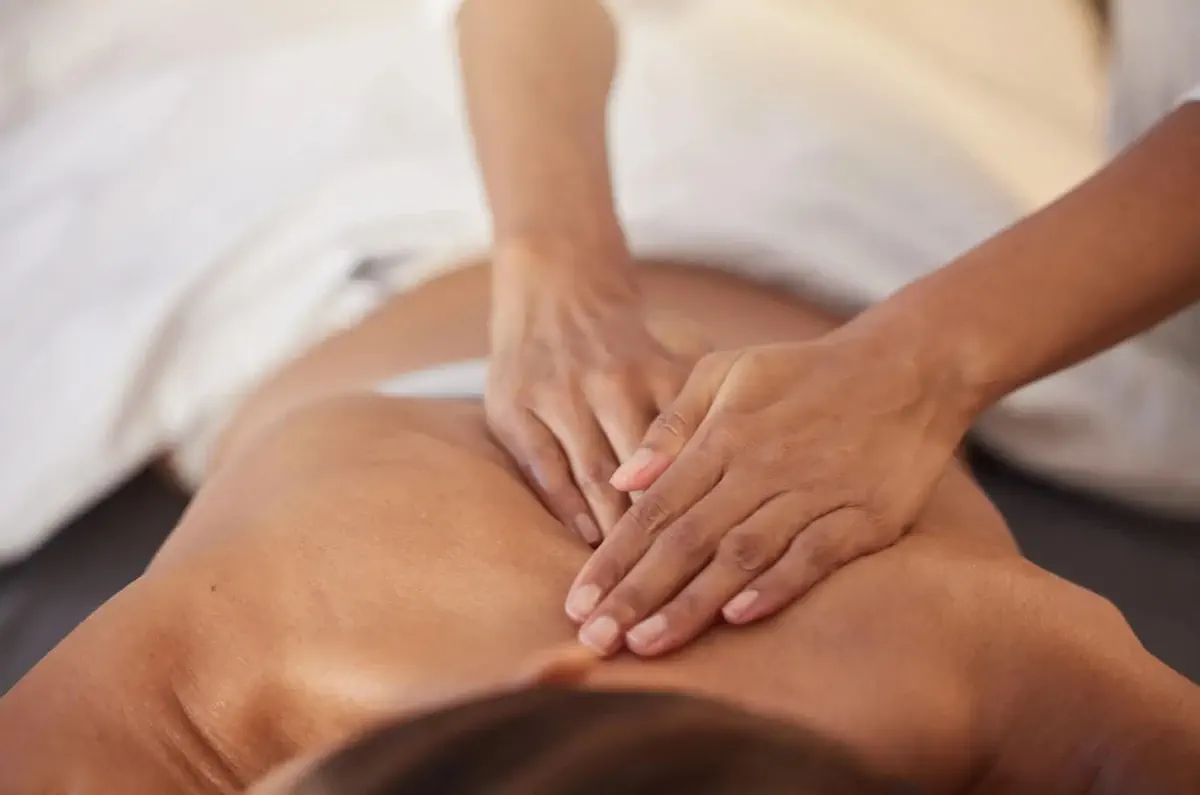
Lower back tightness is the single most common 'where it hurts' answer at our front desk. The cause varies — sitting, driving, lifting, sleeping, mild aging — but the work is similar. The therapist works the lumbar muscles (the long muscles running parallel to the spine), the gluteal muscles (which often refer pain up to the lower back), and the hip flexors when you are face-up.
The goal is to release the muscles around the spine so the spine has more freedom to move. Many guests stand up after a 60-minute session and feel 'taller' or 'looser' immediately. The relief usually lasts 3-7 days for most lifestyles, longer if you also do gentle stretching at home.
The confirmed session prices are $40 for 30 minutes and $60 for 60 minutes. Availability can change, so call ahead if timing or a visit for more than one guest matters.
Neck and shoulder pain
Neck pain is often connected to upper trap tightness, which is connected to mental stress, posture, and screen time. The most relieving session for everyday neck stiffness is Stress Relief — focused work on shoulders, neck, and the base of the skull. The therapist might also work the upper chest muscles, since they pull the shoulders forward and contribute to neck strain.
Angel Massage Spa is at 10716 W Bell Rd, Sun City, AZ 85351 and is open 9:00 AM to 9:00 PM daily. Walk-ins are welcome and private rooms are available.
Pressure: too much or too little
The biggest mistake first-time pain-relief guests make is asking for pressure that is too firm. The intuition makes sense — 'my muscle is tight, push harder.' But muscles respond to skilled pressure, not maximum pressure. A therapist working at moderate-firm pressure with good technique releases knots faster than someone pressing as hard as they can.
If the pressure makes you tense up against it or hold your breath, it is too much. Speak up immediately. The therapist adjusts on the spot. Real release happens when your body is comfortable enough to let the muscle release.
On the other end: if the pressure feels like nothing, also speak up. Light pressure is fine for relaxation but is not what you came for if you have a specific knot to release.
How often for ongoing pain
Choose a session length based on the time you have and the kind of relaxing visit you want. If you have a health concern, ask a qualified healthcare professional whether massage is appropriate for you.
- How fast the tension builds back up. A long-haul truck driver may benefit from weekly sessions; an occasional desk worker may stretch to monthly. - Budget. $60 every two weeks is $1,560/year. For some guests, that is a worthwhile investment in body maintenance. For others, $60 once a month is the right fit. - What else you do for body care. Stretching, walking, sleep quality, and stress management all interact with how often massage is needed.
The confirmed session prices are $40 for 30 minutes and $60 for 60 minutes. Availability can change, so call ahead if timing or a visit for more than one guest matters.
What massage will not fix
Honest list:
At Angel Massage Spa, the confirmed options are full body massage, oil massage, and stress-relief treatments. Explain your pressure preference and any areas you want avoided when you arrive.
The confirmed session prices are $40 for 30 minutes and $60 for 60 minutes. Availability can change, so call ahead if timing or a visit for more than one guest matters.
Combining massage with other care
Angel Massage Spa is at 10716 W Bell Rd, Sun City, AZ 85351 and is open 9:00 AM to 9:00 PM daily. Walk-ins are welcome and private rooms are available.
Choose a session length based on the time you have and the kind of relaxing visit you want. If you have a health concern, ask a qualified healthcare professional whether massage is appropriate for you.
We are not one piece of body care, but we are a useful piece.
FAQ
Angel Massage Spa is at 10716 W Bell Rd, Sun City, AZ 85351 and is open 9:00 AM to 9:00 PM daily. Walk-ins are welcome and private rooms are available.
Can I get massage if I have arthritis? Often yes, but tell us at check-in. We adjust pressure and avoid aggressive work near affected joints.
What if I have high blood pressure? Generally fine, but let us know. We avoid abrupt deep pressure changes.
At Angel Massage Spa, the confirmed options are full body massage, oil massage, and stress-relief treatments. Explain your pressure preference and any areas you want avoided when you arrive.
The confirmed session prices are $40 for 30 minutes and $60 for 60 minutes. Availability can change, so call ahead if timing or a visit for more than one guest matters.
Bringing your specific concerns to the front desk
One of the most useful things you can do for a productive pain-relief session is be specific at check-in. 'My right shoulder hurts' is good. 'My right shoulder hurts when I lift my arm above my head, and it has been like this for six weeks since I started a new job' is much better. The therapist plans the session around real information.
If there is a movement that triggers your pain, demonstrate it at check-in. The therapist watches your range of motion and identifies which muscles are likely involved. This 30-second demonstration often shapes the entire session. The more we know, the more focused the work.
What we cannot promise — and why we say so
Angel Massage Spa is at 10716 W Bell Rd, Sun City, AZ 85351 and is open 9:00 AM to 9:00 PM daily. Walk-ins are welcome and private rooms are available.
Choose a session length based on the time you have and the kind of relaxing visit you want. If you have a health concern, ask a qualified healthcare professional whether massage is appropriate for you.
Self-care between sessions
Things that extend the benefit of a pain-relief session:
- 5-10 minutes of basic stretching daily for the affected area - Hydration — water moves fluid through tissue - Sleep — most muscle repair happens during deep sleep - Walking — gentle movement keeps tissue mobile - Reducing the cause when possible — better desk setup, different pillow, less driving time
Massage is not one piece. The lifestyle around it determines how long each session's relief lasts.
Posture and prevention beyond massage
Choose a session length based on the time you have and the kind of relaxing visit you want. If you have a health concern, ask a qualified healthcare professional whether massage is appropriate for you.
At Angel Massage Spa, the confirmed options are full body massage, oil massage, and stress-relief treatments. Explain your pressure preference and any areas you want avoided when you arrive.
Current Information
The confirmed session prices are $40 for 30 minutes and $60 for 60 minutes. Availability can change, so call ahead if timing or a visit for more than one guest matters.
Angel Massage Spa is at 10716 W Bell Rd, Sun City, AZ 85351 and is open 9:00 AM to 9:00 PM daily. Walk-ins are welcome and private rooms are available.
How long after a session before pain returns
For most everyday tightness, relief from a single session lasts 3-7 days. Stress-related tension tends to come back faster (3-4 days) because the source — stress — is still present. Lifestyle-related tension (driving, desk work) tends to come back in 5-7 days as the daily inputs accumulate. Lifestyle-changes-required tension (poor sleep setup, terrible chair) keeps coming back faster and faster, which is the body's signal to address the cause.
Choose a session length based on the time you have and the kind of relaxing visit you want. If you have a health concern, ask a qualified healthcare professional whether massage is appropriate for you.
Ready for your session?
At Angel Massage Spa, the confirmed options are full body massage, oil massage, and stress-relief treatments. Explain your pressure preference and any areas you want avoided when you arrive.
Have a question this article didn't answer? Chat with us on the bottom right →
Closing thoughts
Most everyday back and neck pain responds to a real, focused massage session. Tell us where it hurts at check-in or send a quick chat on the bottom right ahead of time, and we will plan the session around your specific complaint. Walk in 9 AM to 9 PM at 10716 W Bell Rd, Sun City.